
For decades, solar and other renewable energy technologies have steadily reshaped how electricity is generated, and in recent years, that transformation has accelerated dramatically. We’re proud to have helped customers across the United States – from communities and businesses to utilities and institutions – adopt clean energy not only to reduce emissions, but to improve resilience and control costs.
As the clean energy transition continues, one technology has emerged as a critical companion to clean generation: Battery Energy Storage Systems (BESS). Once viewed as a niche add-on, battery storage is now becoming a foundational element of modern energy systems and a powerful multiplier of the benefits that solar and other renewables can deliver.
Drawing on more than 100 years of combined experience developing clean energy projects across diverse markets, the team at Verogy sees BESS not as a future option, but as a vital present-day opportunity.
Understanding Battery Energy Storage Systems
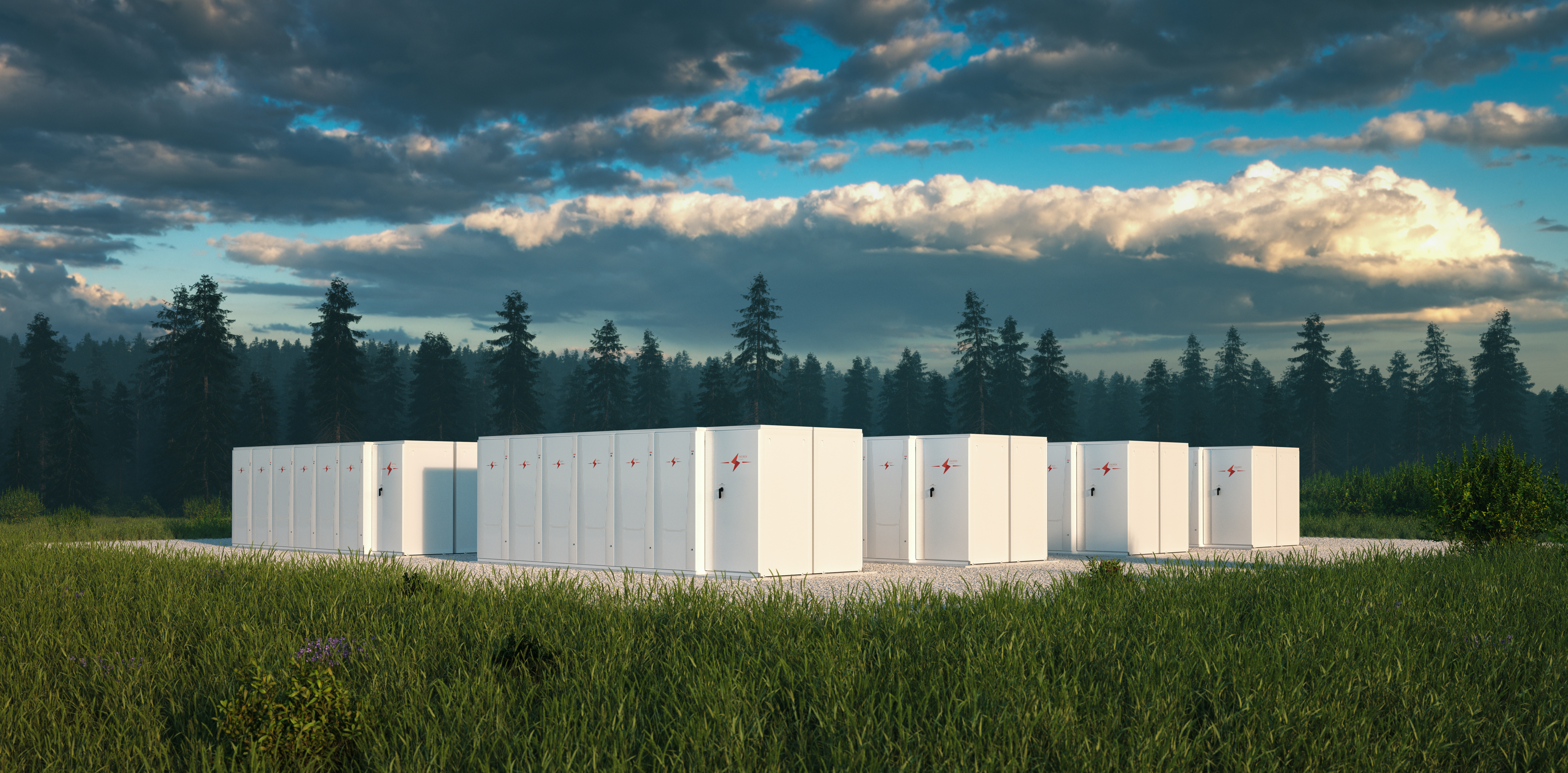
At its core, a battery energy storage system captures electricity and stores it for use at a later time. Energy can be drawn from on-site solar or from other power sources. When demand rises or when the grid is constrained, stored energy is discharged exactly when it is most needed.
A typical BESS includes three primary components:
- Battery modules, most often lithium-ion, which store energy
- Power conversion systems, which convert stored DC electricity into usable AC power
- Control and energy management systems, which coordinate charging, discharging, and grid interaction
Together, these systems allow energy to be shifted across time, smoothing fluctuations and increasing flexibility for both grid-connected and behind-the-meter applications.
How and Where BESS Is Being Deployed
Battery storage is already being widely deployed across the country, in both utility-scale and customer-sited applications.
At the utility level, battery energy storage systems are increasingly recognized as core grid infrastructure. BESS systems are being deployed at transmission and distribution nodes, alongside renewable generation, and in areas where traditional grid upgrades are costly, time-consuming, or difficult to permit.
Utility-scale storage plays a critical role in energy shifting, storing electricity during periods of low demand or high renewable output and delivering it during peak demand. This capability reduces reliance on fossil-fuel peaker plants while enabling greater adoption of solar and wind resources.
Increasingly, utilities are deploying batteries as non-wires alternatives, using strategically sited storage to avoid expensive transmission and distribution investments while improving resilience and supporting long-term clean energy and reliability goals.
Battery energy storage systems are also improving reliability, resilience, and cost control across commercial, institutional, and community settings. In facilities such as manufacturing plants, hospitals, universities, and data centers, BESS – when paired with solar – reduces peak demand and charges, improves power quality, and can provide seamless backup power.
Why Clean Energy Systems Are Stronger With Storage
The value of battery storage becomes especially clear when integrated with clean energy resources.
- Maximizing clean power generation – Renewable energy is inherently variable, often producing electricity when it is not immediately needed. BESS captures excess generation and redeploys it during peak demand, increasing the effective output of renewable assets.
- Enhancing reliability and resilience – Unlike traditional generators, batteries respond within milliseconds. This fast-acting capability supports grid stability, prevents outages, and ensures uninterrupted power for critical operations.
- Improving system efficiency and lowering costs – By absorbing short bursts of demand and smoothing load profiles, batteries allow generators and grid infrastructure to operate more efficiently. This reduces fuel consumption, minimizes wear on equipment, and lowers long-term operating costs.
- Supporting sustainability goals – When storage displaces fossil-based peaking resources and enables increased renewable adoption, emissions decline. For utilities and other stakeholders pursuing sustainability targets, BESS provides a practical, scalable pathway to deeper decarbonization.
Why Decision-Makers Should Give BESS Serious Consideration
Energy planners face a rapidly changing landscape. Electrification, data growth, extreme weather, and aging infrastructure are placing unprecedented demands on the grid. At the same time, clean energy costs continue to fall and storage technologies are maturing quickly. Battery storage addresses these challenges head-on by:
- Providing flexibility in a system increasingly dominated by variable generation
- Enhancing grid reliability without relying on fossil fuels
- Enabling cost control through peak management
- Strengthening energy security at both the local and system level
Importantly, storage is modular and scalable. Systems can be sized for today’s needs and expanded over time as demand grows or market conditions change.
Looking Ahead
Battery energy storage systems are no longer an emerging technology, they are a proven, rapidly expanding solution that is reshaping how clean energy systems are designed and operated.
For utilities, communities, and businesses committed to a reliable, affordable, and low-carbon energy future, BESS represents more than storage. It represents flexibility, resilience, and the ability to fully realize the promise of clean energy.
Learn more about the future of Energy Storage here.
Learn more about the future of Energy Storage here.